

The Day Courage Was Required

By Dr David Putnam
On June 6, 1944, the world witnessed one of the most remarkable military operations in human history.
What we now call D-Day involved over 150,000 Allied troops crossing the English Channel and landing on the beaches of Normandy. It was the beginning of the end for Nazi Germany and one of the pivotal moments of the twentieth century.
History remembers the strategy.
History remembers the generals.
History remembers the speeches.
History remembers the maps covered with arrows.
But I suspect history often forgets what was happening inside the hearts of the young men sitting in those landing craft.
Many were barely more than boys.
Some had never seen combat.
Most had no idea whether they would survive the day.
As dawn broke over Normandy, they faced a reality that no amount of training could fully prepare them for.
The ramps would drop.
The bullets would fly.
And a decision would have to be made.
Advance.
Or retreat.
For many of them, courage was no longer an abstract virtue. It became an immediate necessity.
We often misunderstand courage.
Popular culture portrays courageous people as fearless people.
Yet the testimony of those who have faced genuine danger suggests otherwise.
Courage is not the absence of fear.
Courage is moving forward despite fear.
The soldiers on those beaches were not immune to fear. They were human beings confronting the possibility of death. Their courage was not demonstrated because they felt brave. Their courage was demonstrated because they acted when bravery was required.
Leadership often operates in much the same way.
Many people imagine that effective leaders possess unusual confidence, extraordinary certainty, or an almost supernatural level of self-assurance.
The reality is often quite different.
The best leaders I have known were not fearless.
They simply understood that responsibility sometimes requires action before certainty arrives.
There are moments in every life when the ramp drops.
A difficult conversation must be had.
A moral stand must be taken.
An unpopular decision must be made.
A challenge must be confronted.
A responsibility must be accepted.
And in those moments we discover something about ourselves.
Will we advance?
Or will we retreat?
The Normandy invasion also reminds us that history is rarely changed by a single heroic individual.
We are naturally drawn to stories of extraordinary personalities. We admire famous leaders, celebrated generals, and historic statesmen. Yet D-Day was ultimately successful because thousands of ordinary people fulfilled their responsibilities.
Pilots flew.
Sailors navigated.
Engineers built.
Medics treated the wounded.
Commanders led.
Infantry soldiers advanced.
Each contribution mattered.

The success of the mission depended upon countless individuals doing what they had been called to do.
There is an important lesson here for modern leadership.
We live in a culture fascinated by visibility.
Followers.
Influence.
Recognition.
Personal branding.
Many aspire to positions of prominence while overlooking the importance of faithfulness.
Yet the health of every organization, every community, every church, and every family ultimately depends upon people who quietly accept responsibility.
History often celebrates the visible leader.
Reality is sustained by countless faithful contributors whose names rarely appear in books.
The Normandy landings offer another profound insight.
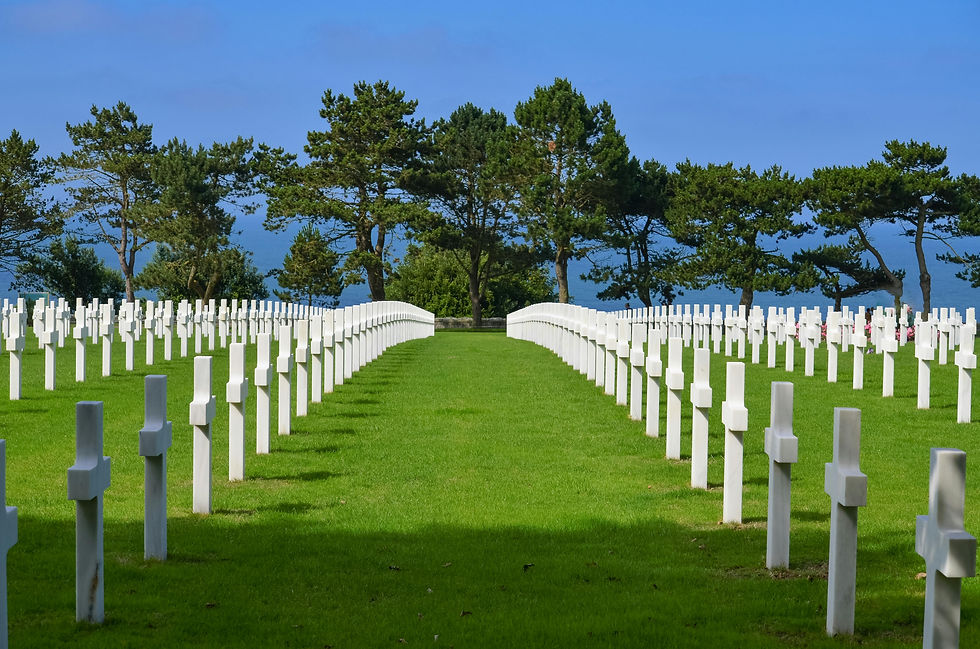
Many of the soldiers who stepped onto those beaches would never witness the final victory.
That fact should give us pause.
They fought for an outcome they might never personally enjoy.
They sacrificed for a future they might never personally experience.
In an age increasingly dominated by immediate gratification, that kind of thinking feels
foreign.
We are conditioned to ask, "What do I gain?"
Yet some of the most significant achievements in history occurred because people asked a different question.
"What can I contribute?"
Healthy leadership requires precisely this mindset.
The parent raising children may never fully see the impact of today's investment.
The teacher may never know how a student's life is ultimately shaped.
The pastor may never witness the full fruit of seeds planted through years of ministry.
The business leader may never observe the long-term influence of a decision rooted in integrity.
The mentor may never fully appreciate how a few encouraging words altered someone's future.
Yet all of these contributions matter.
Not every meaningful investment produces immediate results.
Some of the most important outcomes emerge years later.
Perhaps this is why leadership requires vision.
Vision enables us to act in the present while keeping our eyes fixed upon a future not yet visible.
The architects of D-Day understood this principle.
The beaches were not the objective.
The beaches were merely the beginning.
The goal was liberation.
The goal was peace.
The goal was a future that could not yet be seen from the shoreline.
Great leaders understand this distinction.
They recognize that difficult decisions are often stepping stones toward larger purposes.
The immediate challenge is rarely the ultimate destination.
There is one final lesson from D-Day that strikes me as particularly relevant.
When we look back upon history, it is tempting to imagine that those who participated somehow knew they were living through a defining moment.
Most did not.
For many soldiers, June 6 began like any other military operation.
They did not know how history would remember them.
They did not know what books would eventually be written.
They did not know that future generations would study their actions.
They simply responded to the responsibilities placed before them.
This may be one of leadership's most overlooked realities.
We seldom know which moments will matter most.
We rarely recognize turning points while we are living through them.
What appears ordinary today may prove extraordinarily significant tomorrow.
A conversation.
A decision.
A sacrifice.
A commitment.
A courageous step forward.
Any of these may alter the trajectory of a life, a family, an organization, or a community.
The people who shape history are not always the people who seek significance.
Often they are simply people who embrace responsibility when the moment arrives.
D-Day reminds us that courage is not reserved for extraordinary individuals.
It is available to ordinary people who choose action over retreat.
It reminds us that leadership is less about position and more about responsibility.
It reminds us that meaningful achievement often requires sacrifice.
And perhaps most importantly, it reminds us that the future is frequently built by people who are willing to act faithfully before they can fully see the outcome.
On the beaches of Normandy, courage was required.
The question for each of us is far simpler.
When our own moment arrives—when the ramp drops and responsibility calls—what will we do?
Advance.
Or retreat?


Comments