

Leadership at 30,000 Feet: What Lindbergh’s 1927 Flight Still Teaches Us

by Dr David Putnam
Every season in history carries its own lessons, and late May offers one of the most compelling. On May 21, 1927, a 25-year-old airmail pilot named Charles Lindbergh completed the first solo nonstop transatlantic flight, landing in Paris after 33½ hours in the air.


It was a moment that reshaped aviation, global connectivity, and the imagination of an entire century. But beneath the headlines and hero worship lies a leadership story that speaks directly to those guiding governments, corporations, and institutions today.
1. Lindbergh’s Achievement Wasn’t Luck. It Was Preparation Meeting Opportunity.
Lindbergh didn’t simply “attempt” the Atlantic. He engineered his success long before the wheels left the runway.
He:
· Stripped the plane of anything unnecessary
· Designed a fuel system that allowed him to fly farther than any aircraft of his day
· Trained his body to endure extreme fatigue
· Studied weather patterns, drift calculations, and emergency contingencies
Leaders today often romanticize innovation as spontaneous brilliance. But history tells a different story: the greatest breakthroughs are almost always the result of disciplined preparation.
Leadership takeaway: Innovation is rarely a lightning strike. It is the slow, deliberate accumulation of readiness.
2. He Carried the Weight Alone—But Not the Vision.
Lindbergh flew solo, but he did not dream solo.
A team of engineers, financiers, mechanics, and meteorologists stood behind the Spirit of St. Louis. The vision was collective; the execution was individual.
Modern leaders—especially in government and corporate sectors—often feel the crushing solitude of responsibility. Decisions land on one desk. Accountability narrows to one name. But the vision must never be carried alone.
Leadership takeaway: Execution may be solitary, but vision must be shared. Leaders who isolate themselves collapse under the weight of their own altitude.
3. He Took a Risk Others Considered Impossible.




In 1927, the Atlantic was a graveyard of failed attempts. Several aviators had died trying. Experts warned that the technology wasn’t ready. Investors hesitated.
Lindbergh moved forward anyway—not recklessly, but courageously.
He understood something every modern leader must grasp:
Risk is not the enemy. Uninformed risk is.
He didn’t gamble. He calculated. He prepared. He accepted the cost. And then he acted.
Leadership takeaway: Leaders must distinguish between reckless ambition and informed courage. Progress requires the latter.
4. His Success Created a New Normal.
Before Lindbergh, transatlantic flight was fantasy. After Lindbergh, it was inevitable.
Within a decade:
· Commercial aviation expanded
· International travel accelerated
· Global business transformed
· Governments began rethinking diplomacy, defense, and communication
One leader’s breakthrough became everyone’s new baseline.
This is the quiet truth of leadership: Your courage becomes someone else’s starting point.
Leadership takeaway: The decisions leaders make today—ethical, strategic, or visionary—set the trajectory for those who follow.
5. The Flight Wasn’t the End. It Was the Beginning.
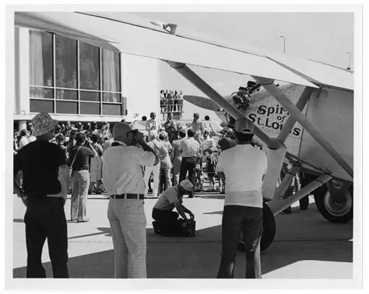
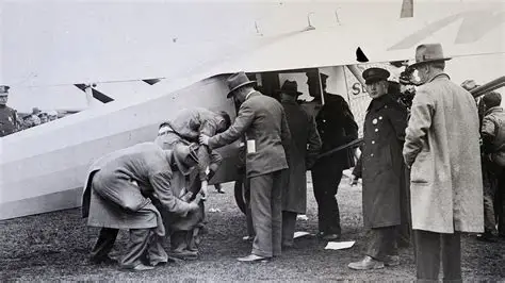
History often freezes Lindbergh in that one moment of triumph. But leadership is never defined by a single achievement. It is defined by what comes after.
Lindbergh spent the next decades:
· Advancing aviation safety
· Consulting on aircraft design
· Influencing early commercial flight
· Advising governments on air strategy
The flight was the spark, not the legacy.
Leadership takeaway: A milestone is not a monument. Leaders must treat success as a launchpad, not a landing strip.
Why This Matters for Leaders Today
Whether you lead a government agency, a corporation, a nonprofit, or a community initiative, the lessons of May 1927 remain strikingly relevant:
· Preparation still matters.
· Shared vision still matters.
· Courageous risk still matters.
· Breakthroughs still redefine the future.
· Legacy still depends on what you do after the applause fades.
Leadership, like aviation, is always about altitude and attitude. And history—when we pay attention—reminds us that the sky has never been the limit. It has always been the invitation.


Comments